ClickCease
  • Cart
  • My Account
  • 1-800-977-3646
  • Translation missing: en.localization.language_label

  • Products
    • Edge & Embedded Hardware

    • Jetson AI Edge Computers

      Extremely Rugged. EDGEBoost Technology. Scalable Sizes

      NVIDIA Industrial Edge AI:

      JCO-6000 Series
      High-Performance AI Edge Computers
      JCO-3000 Series
      Mid-Range AI Edge Computers
      JCO-1000 Series
      Entry-Level AI Edge Computers

      NVIDIA Rugged Edge AI:

      WCO-6000-THR Series
      IP66 Physical AI Computers
      WCO-3000-ORN Series
      IP66 AI Edge Computers
    • X86 Super-Rugged Computers

      Extremely Rugged. EDGEBoost Technology. Scalable Sizes

      Intel Rugged Edge AI:

      RCO-6000 Series
      Industrial Computers
      RCO-3000 Series
      Small Form Factor Computers
      RCO-1000 Series
      Fanless Mini Computers
    • X86 & Arm®
      Semi-Rugged Computers

      Semi-Rugged. Performance Focused. Scalable Sizes

      Intel Industrial Edge AI:

      BCO-6000-RPL Series
      Industrial Computers
      BCO-3000-RPL Series
      Small Form Factor Computers
      BCO-1000-ADLN Series
      Fanless Compact Computers

      Intel and Arm® Industrial Edge AI:

      BCO-500 Series
      Fanless Mini Computers
    • x86 Edge AI Workstations

      x86 Industrial Edge AI Workstations:

      KCO-6000 Series
      High Performance Edge AI Workstation
      KCO-3000 Series
      Expandable Edge AI Workstation
      KCO-2000 Series
      Compact Edge AI Workstation

      x86 Rugged Edge AI Workstations:

      VCO-6000 Series
      Rugged Edge AI Workstation
    • Specialized Computers

      Specialized Rugged Applications:

      DCO-1000 Series
      DIN-Rail Fanless Computers
      ACO-6000 Series
      Railway & In-Vehicle Computers
      WCO Series
      Waterproof Computers

      SuperCap UPS EnergyPack:

      ECO-1000 Supercapacitor
      ECO-1000 Series Supercapacitor
    • Industrial Motherboards & SBCs
      ATX
      Micro-ATX
      Mini-ITX
      3.5" SBC
      2.5" PICO-ITX
      1.8" FEMTO-ITX
    • Industrial Touch Panels

      Industrial Touch Panel PCs:

      SIO Series IP66/69K Washdown Touchscreen Computers
      HIO Series IP65 Open Frame Touchscreen Computers
      VIO Series IP65 Modular Panel PCs and Monitors
      AIO Series IP65 All In One Touchscreen Computers and Monitors

      Industrial Touch Monitors:

      FIO Series IP65 Open Frame Industrial Touchscreen Monitors
      Industrial LCD Monitors
    • Cloud & Storage Hardware

    • Data Center Rack Servers

      On-Prem Data Center

      LLM-1U-RPL 1U Edge AI Rackmount Server

      LLM-2U-AM5 2U Edge AI Rackmount Server

      LLM-3U-AM5 3U Edge AI Rackmount Server

      Cloud Data Center

      AMD High Availability Server
      AMD Flash Storage Server
      AMD High Density Server
      Intel High Availability Server
      Intel Flash Storage Server
      Intel High density Server
      Dual SAS Expander JBOD
    • Request Product Quote
  • Markets

    AI & Robotics

    Intelligence • Decision • Learning

    Physical AI AI Factories Generative AI & On-Prem LLM AGV & AMR Robotics

    Automation & Analytics

    Efficiency • Safety • Precision

    Manufacturing Automation Food and Beverage Manufacturing

    Infrastructure & Edge

    Connectivity • Reliability • Security

    Industrial IoT Gateways Rugged Edge Computing Rugged NVR Surveillance

    Mobility & Transport

    Mobility • Autonomy • Certifications

    Autonomous Vehicle Data Storage Intelligent Railway Vehicle Fleet Telematics In-Vehicle AI

    Smart Cities

    Accessibility • Resilience

    Disaster and Emergency Management Kiosk Machines

    Health Care

    Certifications (UL/Medical)

    Medical Inference Analysis

    Mining

    Certifications (Rugged)

    Mining Automation

    Retail

    Display • Compute • Connectivity

    Digital Signage POS Systems
  • Solutions
    • Computing Systems
    • ARM®-Based Industrial Computers
    • Embedded Computers
    • NVIDIA Jetson Solutions
    • x86 Super-Rugged Computers
    • x86 Semi-Rugged Computers
    • x86 AI Edge Inference Computers
    • Edge Computers
    • Industrial IoT Gateways
    • Fanless Mini Computers
    • Specialized Computers
    • Industrial Touch Panels
    • Industrial Motherboards and SBCs
    • Data Center Rack Servers
    • Technology
    • GPU Acceleration for Edge AI
    • EDGEBoost Nodes
    • EDGEBoost I/O Modules
    • Remote Out-of-Band Management
    • Fanless Cooling For Industrial PCs
    • 5G Ready Fanless Computing
    • Hailo-8™ Edge AI Acceleration
    • AWS IoT Greengrass
    • Trusted Platform Module 2.0
    • Power Backup with Supercapacitors
    • DPU Accelerated Server
    • Ignition® Ready Software PCs
    • OEM ODM Services
    • Customer Advocate
    • Flexible Manufacturing
    • Lifecycle Management
    • Product Engineering
    • Quality Assurance
    • Customer Service
  • Blog
    Decision Toolkits
    Case Studies
    Insights
    Podcast & Webinars
    Press Kits
    Events
    eBooks & Whitepapers
    Media Hub

    Latest Articles:

    Supporting Mission Critical Communications in Military Ground Vehicles with Ultra Compact Embedded Computers
    Supporting Mission Critical Communications in Military Ground Vehicles with Ultra Compact Embedded Computers
    2026 Robotics & Industrial Automation Trends: What Manufacturers Need to Know
    2026 Robotics & Industrial Automation Trends: What Manufacturers Need to Know
    Improving Smart Traffic Intersection Reliability with Super-Rugged Fanless Mini Computers
    Improving Smart Traffic Intersection Reliability with Super-Rugged Fanless Mini Computers
    Cloud AI vs. Physical AI: Different Problems, Different Infrastructure
    Cloud AI vs. Physical AI: Different Problems, Different Infrastructure
  • Company
    • About Us
    • Careers
    • Certifications
    • Corporate Social Responsibility
    • Events
    • Press Kits
    • Return / Exchanges / Repairs (RMA)
  • Resources
    • Decision Toolkits
    • eBooks & Whitepapers
    • Media Hub
    • Case Studies
    • Podcast & Webinars
  • Contact us
  • Cart
  • My Account
  • Translation missing: en.localization.language_label

    Industrial Touch Panel PCs and Monitors

    IP Rated Touchscreen Computers For HMI Integration

    See products

    Supercapacitor Technology

    For Mission-Critical Edge Computing

    Learn more

    ADAS

    Collect, Store, Manage, and Analyze Data
    for Autonomous Vehicles and Advanced Driver Assistance Systems

    Market Overview

    Developing and improving autonomous vehicle systems and driver assistance systems (ADAS) requires massive real-world data from the various high-resolution cameras and vehicle sensors to train AV (autonomous vehicle) and ADAS (advanced driver assistant systems) algorithms. Obtaining this data requires purpose-built computing solutions capable of storing and recording data in real-time with speed and accuracy.

    Premio offers AI Edge Inference computers that are engineered for autonomous vehicle fleets and ADAS data deployments. Our AI Edge inference computers leverage the latest technologies in compute, storage, and connectivity to accelerate machine learning and real-time inference in the harshest environmental settings on and off the road.

    What is an Autonomous Vehicle Data Computer?

    A Need for Speed. Scalable Hardware Acceleration for Miles of Autonomy

    Autonomous Vehicle and ADAS Data Capture and Storage Computers are designed with powerful multi-core processors, ultra-fast NVMe SSD (solid-state drive) storage, graphic engines, and high-speed connectivity to process and store incredible amounts of data generated by vehicle sensors and high resolutions cameras on the road. With more and more test vehicles being deployed, it’s critical that autonomous vehicles manufactures leverage reliable computing solutions to ensure stable development for test drives.

    Power Multi-Core Processors

    Ultra-fast NVMe SSD

    GPU Acceleration

    High speed Connectivity

    Modular and Flexible EDGEBoost Nodes

    Premio’s ruggedized computing solutions are capable of capturing, processing, and storing terabytes of data generated from autonomous vehicles equipped with ADAS and smart IoT sensors. These purpose-built computing solutions can assist with autonomous vehicle development for data acquisition, logging test miles and IoT senor validation for in-vehicle deployments.
    Discover EDGEBoost Nodes

    ADAS and Autonomous Vehicle Data Recording Computers

    The primary function of ADAS and AV computing solutions is to record raw data generated from high-resolution cameras, radar, lidar, GPS, from automotive networks and fleet vehicles. Valuable data is collected, aggregated and then offloaded from the system for further analytics. Intelligent algorithms use this data to train and enable a neural network for smarter and safer vehicles. By using AI edge inference computers for data acquisition, autonomous vehicle manufactures can track and improve intelligence through the different stages of vehicle autonomy.

    Learn more

    3 Stages in the Data Pipeline
    How connected Cars and Test Vehicles Use Data

    Data Ingest Stage

    Consist of a mixed data from a variety of sensors on the vehicles, requiring raw storage Input/output per second (IOPS)

    Data Processing Stage

    The data from the ingest stage is processed for metadata tagging which requires random I/O performance from storage devices
    Data Training Stage

    The training stage uses data for training and relies on powerful GPUs combined with robust computing solutions that provide low latency and random read throughput from the storage media.

    Learn More About How ADAS Computers Capture Sensor Data

    The Benefit for Inference and Training at the Edge

    The future of autonomous vehicles requires a wealth of data. New and emerging solutions provide the necessary infrastructure for high-performance compute as well as the successful deployment for intelligent training models. AI Edge Inference computers accelerate autonomous vehicle developments by addressing challenges in data logging and acquisition, inference analysis with real-time processing, and the ability to run machine learning models at the edge.

    • Collect valuable data from devices that range from camera, radar, lidar, sonar, GPS, and CAN networks to further train neural networks
    • Deploy machine learning algorithms closer to IoT sensors for better insight and intelligence
    • Deliver low-latency results and real-time decision making with purpose-built hardware acceleration

    Learn More About Inference and AI Modeling

    • Deep Learning Training Versus Deep Learning Inference
    • What is Inference Analysis

    Popular Sensor Technologies for Autonomous Vehicles and ADAS

    Imaging Radar

    Multi-Core Compute

    LiDAR

    Fully Integrated Microcontroller Units

    Must-Have Requirements
    For AV/ADAS Data Capture and Storage Computers

    Powerful Multi-Core Processing

    ADAS and autonomous vehicle computing solutions are equipped with powerful multi-core processors, providing systems with plenty of power to process and compute the Terabytes of data from a variety of sensors and high-resolution cameras.
    Learn More About Hardware Accelerators

    High-Speed Storage

    High-resolution cameras and sensors can generate ~4TB+ of data per vehicle per day. With such an enormous amount of data generation, vehicle computing solutions must be equipped with high capacity, high-speed SSD storage options that deliver high-performance and low latency. Modern day storage technology provide durable read/write options for a variety of random IOPS with incredible speed.
    Learn More About NVMe

    Rich I/O

    The computing solution must support multiple interfaces to log data from a variety of sensors. For this reason, ADAS and AV computers are equipped with plenty of I/O ports, such as USB Type-A ports, Serial COM ports, Gigabit Ethernet ports, PoE+ ports, GPIO, and video output ports, enabling connectivity to sensors, cameras, and vehicle buses and networks.
    Learn More About Industrial I/O ports
    Rich Connectivity

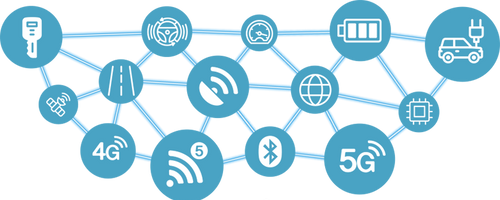
    ADAS and AV computing solutions are equipped with wired and wireless connectivity technologies, such as Gigabit Ethernet, 10 Gigabit Ethernet, Wi-Fi 6, and Cellular 4G, LTE, and 5G connectivity. Multiple connectivity options allow the computing solution to remain connected to the internet to offload mission-critical data to the cloud as well as for the system to receive over-the-air updates.
    Learn More About Wireless Technologies

    CANBus Support

    ADAS and AV recording computers are equipped with CANBus support to log vehicle data from vehicle buses and networks. Data logged from CANBus include vehicle speed, engine RPM, wheel speed, steering angle, and various other rich data that can provide real-time insight and valuable information about the vehicle.
    Learn More About CANBus Network And Technology

    Ruggedized Design

    ADAS and Autonomous Vehicle data recording computers are designed to endure challenging vehicle deployments where systems will be exposed to impacts, vibrations, extreme temperatures, dust, and other environmental challenges.
    Learn More About Essential Computing Hardware Requirements For Edge Computing

    Why Choose Premio For Rugged Edge Computers

    • Premio offers purpose-built in vehicle solutions capable of capturing and storing data required for developing and improving ADAS and Autonomous Vehicle algorithms.
    • 30+ years of extensive design expertise for industrial computing solutions in x86 compute power, storage, rich I/O, and high-speed connectivity
    • Global turnkey manufacturing and support infrastructure in the USA to accelerate deployment of ADAS data capture and storage solutions and Autonomous Vehicle data capture and storage solutions.
    • Deep understanding of the computing power, storage requirements, and connectivity required for ADAS computing solutions and Autonomous Vehicle data capture and storage solutions.
    • Regulatory testing and compliance for rugged industrial computers deployed in vehicle in the North America Market.
    Learn more

    FAQ

    Autonomous vehicles use high-resolution cameras, radar, lidar, ultrasonic sensors, GPS, and other sensors to see or perceive their surroundings. They use the sensory information to navigate themselves, avoid obstacles, read road markers such as signs in order to drive the vehicle safely. However, for the algorithm to safely guide the vehicle, huge amounts of data must be collected and stored to train AI models. The collection and storage of data require powerful, rugged computers capable of connecting to sensors and cameras, processing the data, and storing it so that it can be used at a later time to train the machine learning or deep learning models that guide autonomous vehicles.
    The purpose of ADAS Recording solutions is to collect, store, and offload collected to a cental data center where the data can be used to train AI algorithms using powerful data center computers.
    ADAS (advanced driver assistance systems) are, as the name suggests, electronic systems that assist drivers with driving and parking vehicles. Oftentimes, these systems are based on a software algorithm that must be trained in order to drive and park the vehicle safely. Training ADAS algorithms requires real real-world data to be fed into the neural network. The more data that’s fed to the neural network, the better it becomes at driving the vehicle.
    The ADAS (advanced driver assistance systems) and AV (autonomous vehicle) data that is collected is used to train deep learning and machine learning models used to drive vehicles.
    Intel estimates that an autonomous vehicle outfitted with cameras, radar, sonar, lidar, and GPUs can generate up to 4,000 GB or 4TB of data per day. The data generated by a single autonomous vehicle is more than the data generated by 3,000 in a single day.
    Level 5 automation, which is the highest level of automation, requires the most amount of data because the vehicle must be able to completely drive itself without any human intervention. This requires a lot of data to train the algorithm responsible for accurately and safely driving the vehicle. Learn More About the Different Levels Of Autonomous Driving
    The data recorded by ADAS computers and AV computers can be uploaded to the cloud via Ethernet, Wi-Fi 6, or Cellular Connectivity. However, since the data generated by cameras and sensors per day can reach up to 4TBs, the best solution that organizations have is to manually remove the drives and manually offload the data to a central computer systems. Manual offloading is the norm as it would take Wi-Fi or Cellular connectivity too long to upload Terabytes of information to the cloud.

    Go to top
    Loading ...

    Contact us

    Contact us

    Contact us

    Stay Connected

    • About Us
    • About Us
    • Products
    • Services
    • Blog
    • Certifications
    • Corporate Social Responsibility
    • Terms & Conditions
    • Privacy Policy
    • Quality Policy
    • Environmental Policy
    • Services
    • Customer Advocate
    • Flexible Mfg.
    • Lifecycle Mgmt.
    • Product Eng.
    • On-Demand Logistics
    • Quality Assurance
    • Customer Service
    • Support
    • Contact us
    • Virtual Factory Portal

    Premio Inc.

    • 918 Radecki Court, City of Industry, CA 91748, United States
    • 626.839.3100 | 800.977.3646
    • sales@premioinc.com

    Premio Taiwan Inc.

    • 18F, No.176, Jianyi Road, Zhonghe District, New Taipei City 235603, Taiwan
    • 886.2.7731.7888
    • sales@premioinc.com

    CAGE: 0P210 / UEID: Y4N2TTTE7HD5

    2026 Premio Inc. All Rights Reserved